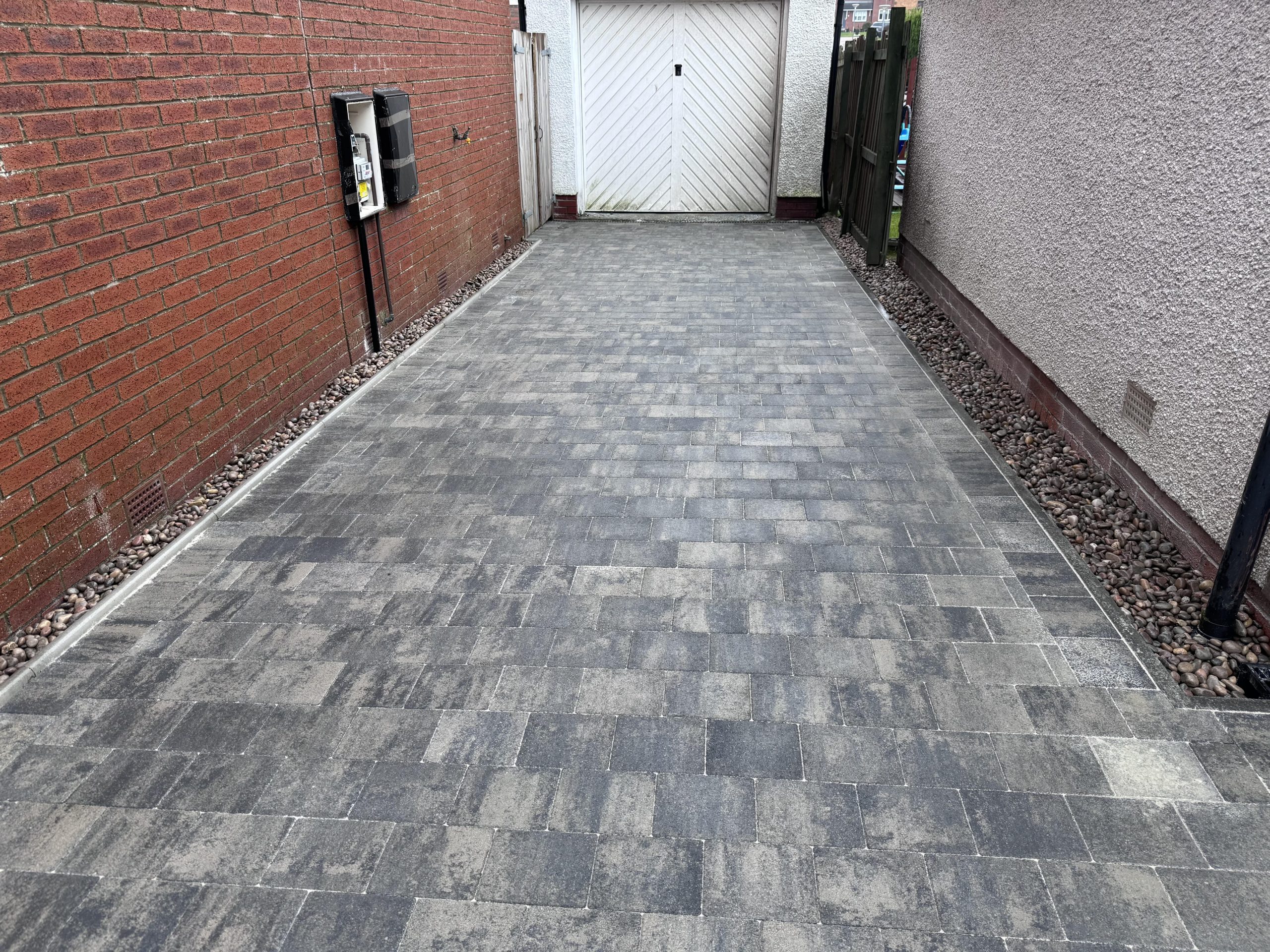
Scottish winters are not gentle on outdoor surfaces. Freeze-thaw cycles lift joints. Standing water turns to ice. Salt and grit can mark the wrong materials if you use them carelessly. The good news is a short autumn and early-winter check usually stops small problems becoming expensive spring repairs.
At LCL Landscaping & Groundcare in Motherwell we build and look after driveways, patios and garden hard landscaping across Lanarkshire and Greater Glasgow. Here is what we recommend homeowners do now, while the weather is still workable between cold snaps.
1. Clear leaves and debris before they rot into the surface
Wet leaves hold moisture against paving and block drainage channels. On block paving they work into joints. On porcelain and natural stone they leave stains if left for weeks.
Sweep or blow the surface after storms. Lift mats and plant pots so damp is not trapped underneath. If you have a resin-bound driveway, clear organic debris sooner rather than later so it does not stain the binder.
2. Check falls and drainage actually still work
A well-built driveway or patio should shed water to a gully, channel or soft edge. Winter shows you quickly if something has settled.
After rain, walk the surface. Look for puddles that sit for hours. Check ACO-style channels and gullies for silt and leaves. Clear them. If water is pooling against the house or garage, that is a priority to fix before a hard freeze.
Standing water that freezes expands in joints and hairline cracks. That is how small dips become trip hazards by February.
3. Inspect joints, edges and kerbs
Block paving relies on jointing sand. Heavy rain and traffic wash it out. Tops of joints that look empty need topping up with the right kiln-dried sand before frost gets into the voids.
Look along the edges of the driveway where kerbs meet soft ground. Soft spots and rocking blocks usually mean the edge restraint needs attention. Catching that early is far simpler than lifting a whole bay later.
On porcelain and stone patios, check pointing. Crumbling joints let water in. That water freezes and prises the joint open further.
4. Be careful with rock salt and de-icers
Not every surface likes salt. Some natural stones and poor-quality concrete can pit or discolour. Resin systems and some porcelain finishes also have manufacturer guidance on what you should avoid.
If you must treat ice for safety, use a product suited to your surface, brush excess off once the thaw starts, and never pile salt against metal edgings or aluminium door thresholds. For commercial car parks we grit with proper kit and forecasting. For a home driveway, less salt used carefully often beats dumping bags on every frost.
Where slip risk is high on steps, consider grit bins at the house end of the path so you are not scrambling in the dark.
5. Watch for frost heave and soft ground at the edges
After a cold snap, check where paving meets lawn or borders. Soft, heaving edges and cracked concrete haunching are early warning signs. Note them and get them looked at on a dry day rather than waiting until spring when the diary fills up.
6. Soft landscaping that protects hard landscaping
Overgrown hedges that drip onto a patio keep it wet. Climbing plants that trap moisture against a wall encourage moss. A light winter prune and clearing gutters above outdoor spaces helps paving dry between showers.
Moss on north-facing patios is common in Scotland. A gentle clean on a mild day (never pressure-wash on full blast into joints) keeps surfaces safer underfoot.
7. Planning a spring project? Winter is still useful time
If you are thinking about a new driveway or patio for spring, winter is a good moment to measure, design and book. Ground can still be worked on many days. Lead times for quality materials and skilled teams tighten as soon as the weather turns. Starting the conversation now means you are not stuck waiting when everyone else rings in March.
We still take on suitable hard landscaping through the quieter months when conditions allow. Every site is different. Frost, clay and access all matter.
Quick winter checklist
- Sweep leaves and clear gullies after storms
- Watch for puddles that sit after rain
- Top up jointing sand where it has washed out
- Check kerbs and edge restraints for movement
- Use salt carefully and only where your surface allows it
- Note soft edges after freeze-thaw and book a look on a dry day
- If a spring project is on your mind, talk to us now
Get in touch
If something does not look right on your driveway or patio, or you want a straight opinion before spring, call us on 01698 446 753, email sales@lclscotland.co.uk, or send a message via lclscotland.co.uk.
We are LCL Landscaping & Groundcare, based on Orbiston Street in Motherwell, working across Lanarkshire and Greater Glasgow.
